Boucle Fabric Texture Brushes: ABR for Digital Art
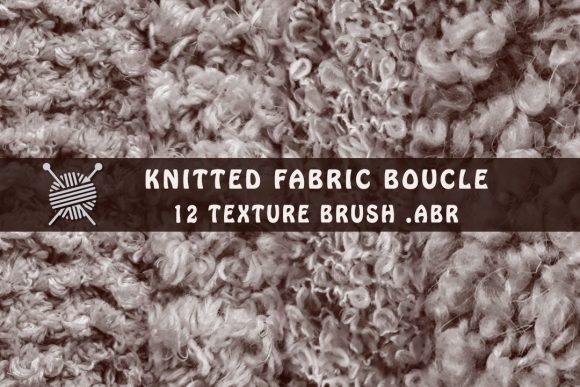
If you have ever tried to replicate the cozy, nubby feel of bouclé fabric in a digital illustration, you know the struggle. Standard airbrushes and hard-edged pencils just don't cut it. They lack that specific organic irregularity that makes woven textiles feel real. This is where Boucle Fabric. Texture Brushes. ABR changes the workflow for digital artists and designers. These aren't just another set of generic grunge overlays; they are specialized tools designed to mimic the looped yarn structure of knitted fabric directly within your software.
The collection comes as a single ZIP folder containing 12 distinct brushes compatible with both Photoshop and ProCreate in .ABR format. What stands out immediately is the efficiency of the installation process. You can install the entire set in one file, saving you the tedious task of importing assets individually. With a size of 2500 pixels, these brushes offer high-resolution stamping power, ensuring that your textures remain crisp whether you are designing a small social media graphic or a large-scale print piece.
Capturing the Organic Soul of Knitted Textiles
The visual personality of bouclé is defined by its unpredictability. It is a fabric made from looped yarn, creating a surface that is both soft and structurally complex. When translating this to a digital medium, the goal is to avoid repetition. Nothing kills the illusion of a handmade textile faster than a pattern that looks too perfect or tiled.
Boucle Fabric. Texture Brushes. ABR succeeds because it embraces chaos. Each stroke deposits a cluster of "yarn loops" that vary slightly in density and orientation. This variation is crucial for creating depth. In traditional editorial design or packaging design, adding a tactile element can make a flat screen feel tangible. By using these brushes, you introduce a sense of warmth and approachability to your work. The texture feels inviting, much like a chunky knit sweater, which can significantly alter the emotional response of your audience.
For creators working in brand identity, this kind of texture adds a layer of sophistication without being overwhelming. It suggests craftsmanship. When a logo or a background element carries the subtle imperfection of a knitted weave, it signals to the viewer that human thought and care went into the design. This is particularly effective for brands in the lifestyle, home decor, or artisanal food sectors, where the story of making is just as important as the final product.
Practical Applications Across Creative Industries
The versatility of these 12 brushes extends far beyond simple background fills. Because they are high-resolution and specifically tuned to mimic fabric, they serve as powerful building blocks for various projects. Here is how different professionals can leverage them:
- Digital Illustrators: Use the brushes to clothe characters in realistic sweaters or coats without needing to photograph reference materials. The .ABR format ensures pressure sensitivity works naturally in ProCreate, allowing line weight to dictate the thickness of the "yarn."
- Graphic Designers: Incorporate the texture into social media graphics to break up solid color blocks. A subtle bouclé overlay on a promotional post can increase engagement by catching the eye with something that looks touchable.
- Publishers: In editorial design, these textures work beautifully as chapter headers or drop-cap backgrounds. They provide enough contrast to separate sections but are soft enough not to interfere with readability.
- Product Mockup Artists: When presenting a logo design on a virtual garment, using a matching texture brush helps blend the graphic into the fabric, making the mockup look photorealistic rather than pasted on.
It is important to note that while these are texture tools, they function best when treated with intention. Slapping a texture over everything can lead to visual noise. Instead, use them to highlight specific areas or to create a focal point. For instance, in a web design context, you might use a light opacity setting to give a hero section a subtle fabric grain, grounding the interface in a material reality that pure vector shapes often lack.
Enhancing Brand Perception Through Tactile Design
In a world saturated with sleek, glass-like interfaces and sterile vector art, texture offers a competitive advantage. It influences brand perception by adding warmth. A brand that utilizes soft, knitted textures in its visual language is often perceived as more accessible, comfortable, and trustworthy. This psychological cue is powerful in marketing campaigns where connecting emotionally with the consumer is the primary objective.
Furthermore, consistency is key to professional branding. Having a dedicated set of 12 brushes means you can maintain a consistent textural language across all your deliverables. Whether you are designing a business card, a website banner, or an Instagram story, the underlying texture remains recognizable. This fosters brand recognition. Over time, your audience begins to associate that specific tactile quality with your brand, much like they would recognize a specific serif font or color palette.
However, balance is essential. When pairing these heavy textures with typography, you must consider visual hierarchy. If your background is busy with bouclé loops, your text needs to be clean and legible. A bold sans serif font often works best here, providing a modern counterpoint to the organic background. Avoid using intricate script fonts or thin handwritten fonts directly over dense texture areas unless you add a solid backing shape, as the details of the letters may get lost in the yarn-like noise.
Getting the Most Out of Your Design Assets
Integrating Boucle Fabric. Texture Brushes. ABR into your toolkit is straightforward, but maximizing their potential requires a bit of experimentation. Since the package includes 12 variations, take the time to test each one. Some may be denser, suitable for shadow areas, while others might be lighter, perfect for highlights. The 2500-pixel size gives you plenty of room to scale down without losing detail, but be cautious about scaling up beyond the native resolution if you are working on massive billboards.
When evaluating project fit, ask yourself what emotion you want to evoke. If the goal is high-tech precision, these brushes might not be the right choice. But if you aim for comfort, nostalgia, or artisanal quality, they are ideal. Always test your font pairing choices against the texture. Print a sample or view it on multiple devices to ensure the texture doesn't degrade the clarity of your message.
Finally, remember the value of supporting independent creators. This collection was crafted by Svetlana, who understands the specific needs of digital painters and designers. If you encounter any issues with installation or have questions about how to achieve a specific look, reaching out directly is often the fastest way to solve problems. Good design assets are an investment in your workflow efficiency and the quality of your final output. By choosing tools that genuinely replicate real-world materials, you elevate your digital work from flat images to immersive experiences.
Whether you are a hobbyist looking to add realism to your ProCreate sketches or a small business owner refining your commercial font and image strategy, these brushes offer a practical solution. They bridge the gap between the digital canvas and the physical world, reminding us that even in pixels, there is room for the imperfect beauty of hand-spun yarn.