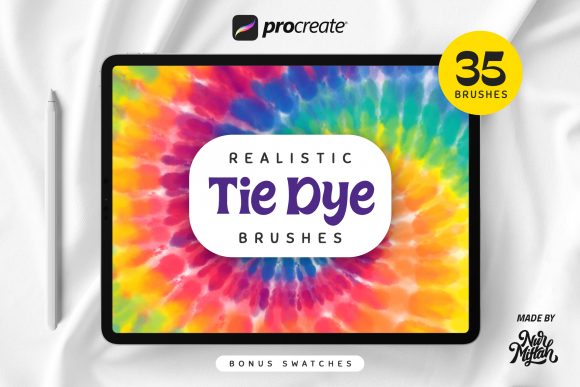
Unlock Authentic Textures with Procreate Realistic Tie-Dye Brushes
There is a distinct satisfaction in creating digital art that feels tangible. When you swipe your stylus across the screen, you want to see fibers, bleeds, and organic imperfections that mimic the real world. This is exactly where Procreate Realistic Tie-Dye Brushes shine. Unlike standard digital tools that often produce flat, repetitive patterns, this collection captures the chaotic beauty of actual fabric dyeing. However, diving into textured digital art comes with a learning curve, and many creators stumble over simple compatibility issues or usage misconceptions that hinder their workflow. By understanding the specific nature of these tools, you can avoid frustration and produce stunning designs for everything from t-shirts to wall art.
Understanding the Unique Dual-Shape Mechanism
One of the most overlooked features of high-quality texture brushes is how they react to direction. A common mistake beginners make is treating all brushes as static stamps. With this specific collection of 35 main brushes, the engine is designed to offer two shapes in one brush depending on your stroke direction. If you drag horizontally, you might get a stretched, fluid bleed; drag vertically, and the texture might compress or reveal a different grain.
Many users miss this nuance because they only test a brush with a single downward flick. This limits the versatility of the tool and leads to artwork that looks repetitive. To get the most out of these brushes, you must experiment with rotation and angle. Try swirling your wrist as you paint or changing the canvas orientation. This approach unlocks the full potential of the original fabric textures embedded in the brush engine, giving your digital spirals and bullseyes a genuine, hand-dyed impression that static images simply cannot match.
The Critical Compatibility Check: iOS Only
Perhaps the most significant error potential buyers make is assuming universal compatibility. It is vital to clarify immediately: these brushes do not work in Photoshop or any other desktop application. They are engineered exclusively for the iOS app Procreate.
We often see frustrated artists purchasing texture packs only to realize they cannot import them into their preferred desktop software. This isn't a flaw in the product but a mismatch in expectations. Procreate uses a proprietary brush file format (.brush) that leverages the iPad's touch and tilt capabilities in ways desktop software does not. Before purchasing, verify your workflow. If you are an iPad user, you are set. If you rely solely on Photoshop, you will need to look for .abr files instead. Ensuring you have the right tool for your device saves time, money, and the disappointment of an unusable download.
Version Compatibility and Setup
Another frequent point of confusion involves software versions. You might worry that your older iPad or an earlier version of Procreate won't support high-resolution textures. Rest assured, this collection is optimized to function seamlessly on Procreate 5X and earlier versions. There is no need to rush an expensive hardware upgrade just to use these tools. The developers have ensured backward compatibility, meaning whether you are running the latest update or a stable older version, the large resolution of these brushes will render correctly without lagging your canvas.
Avoiding the "Flat Design" Trap in Commercial Projects
Entrepreneurs and small business owners often turn to digital tools for product mockups, such as clothing design, phone cases, or bedding. A prevalent issue in this space is the use of low-resolution or overly synthetic patterns. When a customer sees a t-shirt design online, they can instantly tell if the pattern looks like a cheap digital filter rather than real fabric. This perception can hurt branding and reduce sales.
These brushes address that problem by utilizing original textures taken from a combination of tie-dye patterned fabrics. Because the source material is photographic and real, the resulting strokes carry the subtle irregularities of cotton and dye. When applying these to a pillow design or a bedspread mockup, the result convinces the viewer of the product's quality. To maximize this benefit, avoid scaling the brushes up beyond their intended limit, although these are high-resolution. Instead, build your patterns by layering multiple strokes at varying opacities. This mimics the way dye actually penetrates fabric layers, adding depth that flat vector graphics lack.
Making the Most of the Included Color Palettes
Creating a cohesive tie-dye look requires more than just the right brush; it demands the right colors. A common pitfall for hobbyists is selecting clashing neon colors that scream "digital" rather than "artisan." This collection includes a bonus color palette specifically curated to complement the brush textures.
Ignoring these swatches is a missed opportunity. These colors are likely balanced to ensure that when the blending modes of the brushes interact, they create realistic secondary colors rather than muddy grays. For marketers and content creators, using these pre-set harmonies speeds up the design process significantly. You can focus on the composition of your spiral or crumple pattern without second-guessing your hex codes. Start with the provided swatches to understand the logic behind the color theory, then branch out once you are comfortable.
Practical Steps for Flawless Integration
To ensure you have a smooth experience from download to final export, follow this practical checklist:
- Verify Your Device: Confirm you are using an iPad with the Procreate app installed. Remember, this will not function on Android tablets or Windows PCs.
- Import Correctly: Download the file directly to your iPad or use AirDrop. Tapping the file in the "Files" app while Procreate is open usually triggers an automatic import into your brush library.
- Test Stroke Direction: Before starting a client project, create a test canvas. Draw lines in eight different directions to observe how the dual-shape engine reacts.
- Layer Strategically: For complex items like wall arts or branding backgrounds, use multiple layers. Place base colors on one layer and detailed texture strokes on another to maintain editability.
- Check Resolution Needs: While these brushes are high-resolution, always set your canvas size to match your final output (e.g., 300 DPI for print merchandise) before you begin painting.
By paying attention to these details, you transform a simple purchase into a powerful asset for your creative business. Whether you are a freelancer designing a logo with a retro vibe or a hobbyist making custom gifts, the difference lies in the execution. The Procreate Realistic Tie-Dye Brushes offer a complete solution with 35 varied shapes and essential color tools, but their true value is unlocked when used with intention and technical awareness. Take the time to understand the tool, respect its platform limitations, and leverage its unique textural capabilities. The result will be artwork that doesn't just look good on a screen, but feels real enough to touch.